
Harmonizing Afghan Refugees and Host Communities in Urban Slums in Pakistan for Peaceful Coexistence and Social, Gender-positive Inclusiveness
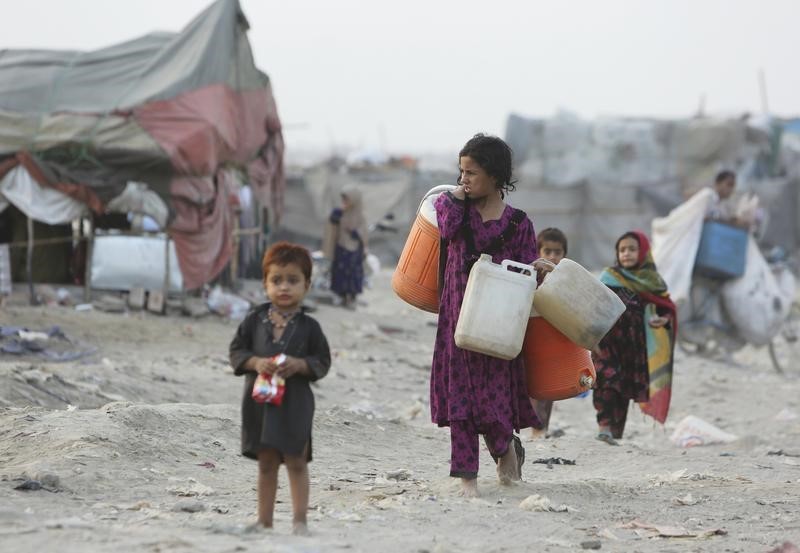
Objectives: Pathways for sustainable, safe, resilient and inclusive urban development are demonstrated in thirty urban slum communities hosting Afghan refugees in five cities in Pakistan.
Aims: The four-year project, funded by the Government of the Netherlands and launched in late 2024, aims to empower vulnerable Afghan refugees and host communities living in selected low-income urban settlements in Peshawar, Kohat, Haripur, Karachi, and Quetta. The project promotes inclusive and sustainable urban development, addressing key challenges such as inadequate housing and overcrowding, tenure insecurity, limited infrastructure and basic services, poor living conditions, and restricted economic opportunities. It also seeks to strengthen social cohesion and integration between refugee and host communities, while improving safety and well-being, including efforts to prevent and respond to gender-based violence.
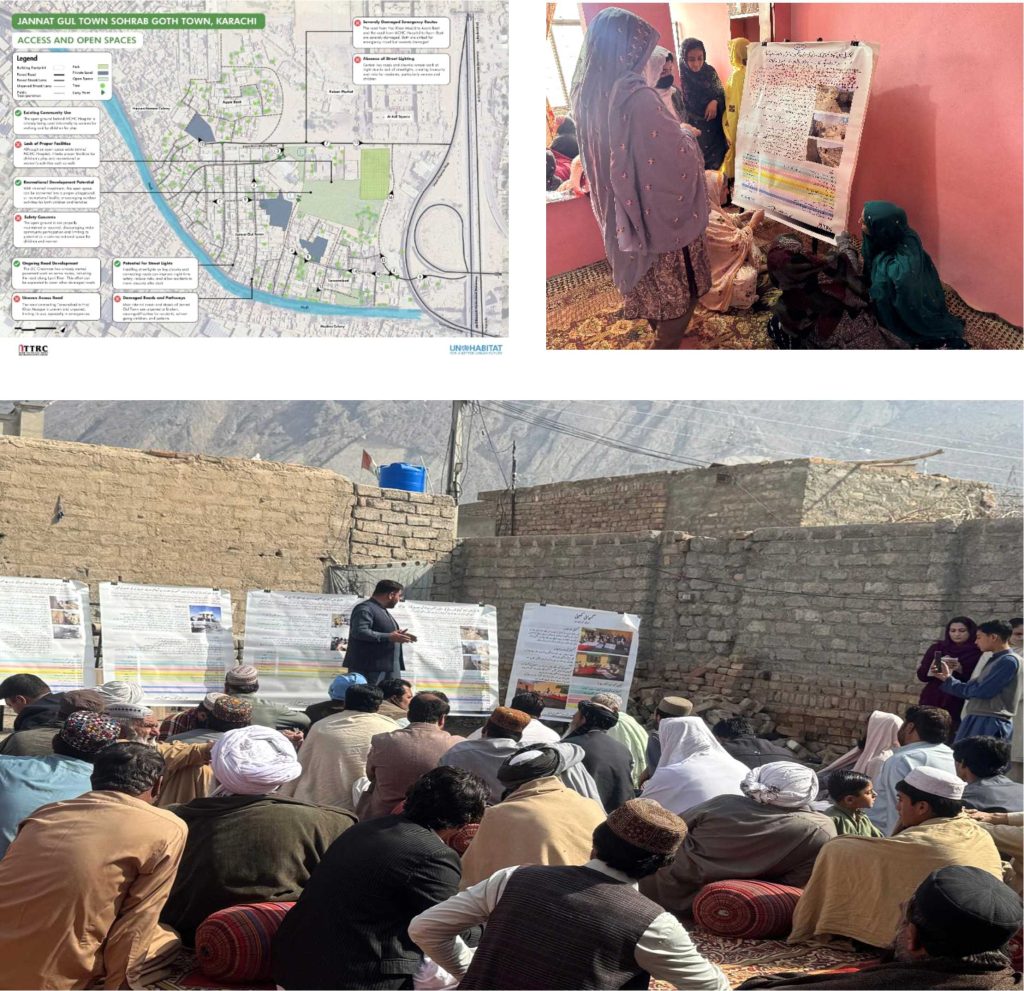
Approach: The project applies a participatory settlement upgrading approach that places communities at the center of planning and decision making. Through the Community Action Planning process, Afghan refugees and local host communities work together to map their settlements, identify key challenges and priorities, and jointly design practical solutions to improve living conditions. This process enables communities to contribute their knowledge and experience in identifying infrastructure needs, environmental concerns, and social priorities within their neighborhoods. By engaging communities directly in the planning process, the project ensures that proposed interventions are locally relevant, socially inclusive, and responsive to the realities of informal settlements. The participatory approach also strengthens trust and cooperation between communities and government institutions, creating a foundation for sustainable and community owned development. The initiative integrates infrastructure improvements, environmental restoration, and socio-economic initiatives to support more resilient, inclusive, and better serviced urban settlements.
Innovation and Learning
The project serves as a demonstration platform for innovative approaches to informal settlement upgrading in Pakistan. Through participatory planning, partnerships with municipal authorities, and community driven interventions, the initiative tests practical solutions aimed at improving living conditions in underserved settlements. The project also generates settlement data, planning tools, and policy insights that can inform future urban development programmes and support the replication of successful approaches in other cities.
Key interventions
Water, Sanitation and Hygiene (WASH): Water supply networks, sewerage and drainage systems, community sanitation facilities, and solid waste management services are key interventions under the project. Improving access to safe water and sanitation is a major priority in informal settlements where Afghan refugees and local communities often face severe service gaps. The project works closely with the Water and Sanitation Authorities in Karachi, Quetta, and Peshawar to ensure that improvements are aligned with municipal systems and sustainably maintained.
Environmental Restoration: Rehabilitation of drainage systems, improved solid waste management, restoration of degraded open spaces, and community environmental awareness initiatives support environmental improvement in informal settlements. These interventions aim to improve sanitation conditions, reduce environmental risks, and strengthen resilience to flooding while encouraging communities to maintain cleaner and healthier neighborhoods.
Community Infrastructure and Urban Connectivity: Pedestrian bridges and pathways, street paving and drainage improvements, access routes connecting settlements to main roads, and community infrastructure facilities help improve connectivity. These investments reduce the isolation of informal settlements and enhance mobility, access to services, and economic opportunities.
Safe and Inclusive Public Spaces: Gender friendly public spaces, solar street lighting, and community meeting areas are designed to create safer and more inclusive neighborhoods. These improvements help increase safety, particularly for women and vulnerable groups, while strengthening community interaction and social cohesion.
Place Based Livelihood Opportunities: Skills development, support to small businesses and micro enterprises, community based economic initiatives, and local market development support livelihood opportunities. These interventions aim to strengthen local economic activity and improve income opportunities for Afghan refugees and local communities.
Housing, Land and Tenure Issues: Settlement profiling, spatial planning, policy dialogue on tenure security, and technical guidance on housing improvements support more sustainable settlement development. Addressing housing, land, and property issues helps enable long term improvements in housing conditions and access to services.
Spatial planning, participatory co-creation, and integration of settlements with the wider urban fabric: The project promotes inclusive spatial planning by engaging communities in identifying priorities and designing improvements to their neighborhoods. Through community mapping, consultations, and joint planning workshops, residents contribute to decisions on infrastructure, public spaces, and service delivery. These locally developed plans are aligned with municipal systems to better connect settlements with the wider city, improving access to infrastructure, services, and economic opportunities while strengthening social cohesion and sustainable urban development.
Regularization of Slums: The project supports slum upgrading and regularization by strengthening the capacity of the Human Settlement Department and Katchi Abadi Authorities to plan and implement improvements in informal settlements. Through technical assistance, data collection, and participatory planning, the project helps authorities identify priority areas for upgrading, improve basic infrastructure and services, and advance the regularization of settlements where feasible